Consultant Radiologist and Interventional Pain Specialist • Updated 16 September 2026
The 30-second answer
Persistent back pain can come from spinal joints, discs, nerves, muscles, the sacroiliac joints, inflammatory conditions, or a combination of factors. Sometimes no single structure explains everything. The useful question is not simply “What does my scan show?”, it is “Does it match my symptoms, and would it change my treatment?”
Step 1
Your pain
Step 2
The right diagnosis
Step 3
The right treatment for you
Step 4
Recovery
Understanding the problem
Back pain is a symptom, not a diagnosis.
Back pain that refuses to settle can be frustrating, especially after medication, exercises or physiotherapy. An MRI may show several abnormalities, may look surprisingly normal, or may contain terms such as “wear and tear” that sound more alarming than they are. Persistent pain is rarely solved by looking at one scan, one joint or one treatment in isolation.
Start with the diagnosis, not the procedure.
What can cause persistent back pain?
Possible contributors include facet joints, discs, irritated nerves, muscles and other soft tissues, sacroiliac joints, and, less commonly, inflammatory or other medical conditions. More than one factor can be present at the same time. That is why the pattern of symptoms, examination and imaging need to be considered together.
Why can pain continue for months?
Ongoing pain does not always mean ongoing tissue damage. Reduced activity, altered movement, poor sleep, deconditioning and increased sensitivity of the nervous system can all maintain symptoms. This does not make the pain imaginary. It means the problem may have become more complex than the original trigger.
Back pain with leg pain is different
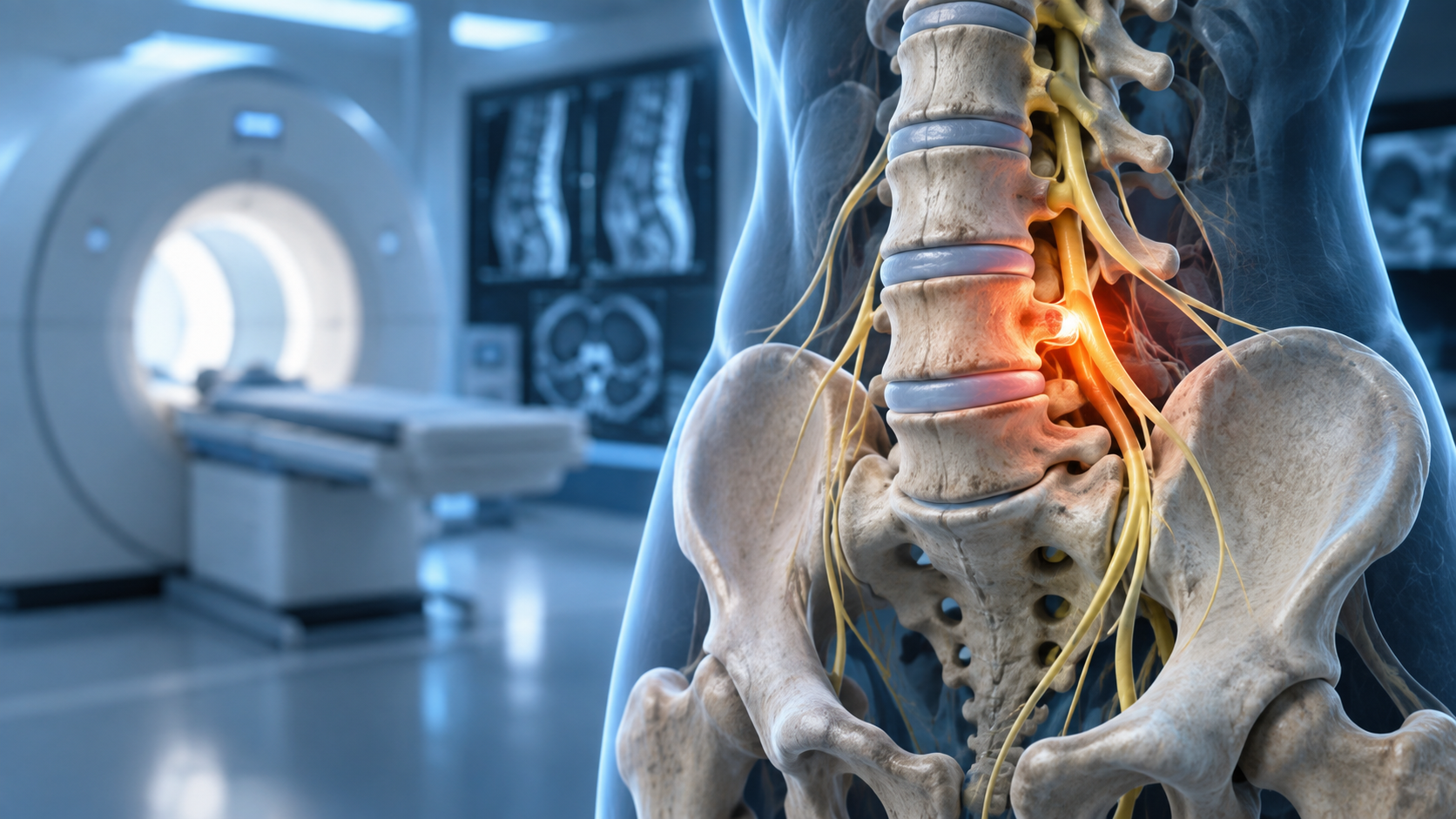
Pain travelling into the buttock or leg, particularly with tingling, numbness or weakness, can indicate nerve irritation or compression. This is commonly called sciatica and may need a different pathway from pain that remains mainly in the back.
Our model combines senior clinical assessment, specialist imaging, pain medicine, targeted intervention and rehabilitation. The aim is to reduce fragmentation, avoid unnecessary duplicated steps and give you a clearer plan.
Consultant-led assessment
Open MRI, X-ray and ultrasound
Image-guided procedures when appropriate
Physiotherapy, chiropractic and rehabilitation
Rheumatology and orthopaedic input when needed
Transparent, coordinated private care
The Dorset Pain Clinic difference
A complete team around the patient.
Dr Laith Al-Obaidi
Consultant Radiologist and Interventional Pain Specialist
Combines diagnostic imaging expertise with image-guided musculoskeletal and spinal intervention, linking symptoms, examination and imaging before deciding whether a procedure is appropriate.
Dr Khalid Alaib
Consultant in Pain Medicine and Anaesthesia
Provides senior specialist assessment of persistent and complex pain, medication review and personalised treatment planning, with extensive experience in interventional pain medicine.
Common questions
Answered simply.
Does persistent back pain always mean damage?
No. Pain can persist even when there is no ongoing tissue injury. The assessment should consider clinical findings, function, imaging and the wider pain picture.
Do I always need an MRI?
No. Imaging is most useful when it is likely to answer a specific clinical question or change management.
Will I automatically need an injection?
No. A consultation does not commit you to a procedure. Treatment may involve rehabilitation, medication review, investigation or, in selected cases, an image-guided intervention.
If pain is affecting your sleep, work, mobility or confidence, a specialist assessment can help clarify what is happening and what the sensible next step should be.