Consultant Radiologist and Interventional Pain Specialist • Updated 16 September 2026
The 30-second answer
An MRI can be extremely useful when it answers a specific clinical question, but it is not automatically needed for every episode of back pain. The best scan is the one that changes what your clinician does next.
Step 1
Your pain
Step 2
The right diagnosis
Step 3
The right treatment for you
Step 4
Recovery
Understanding the problem
Why people understandably want an MRI
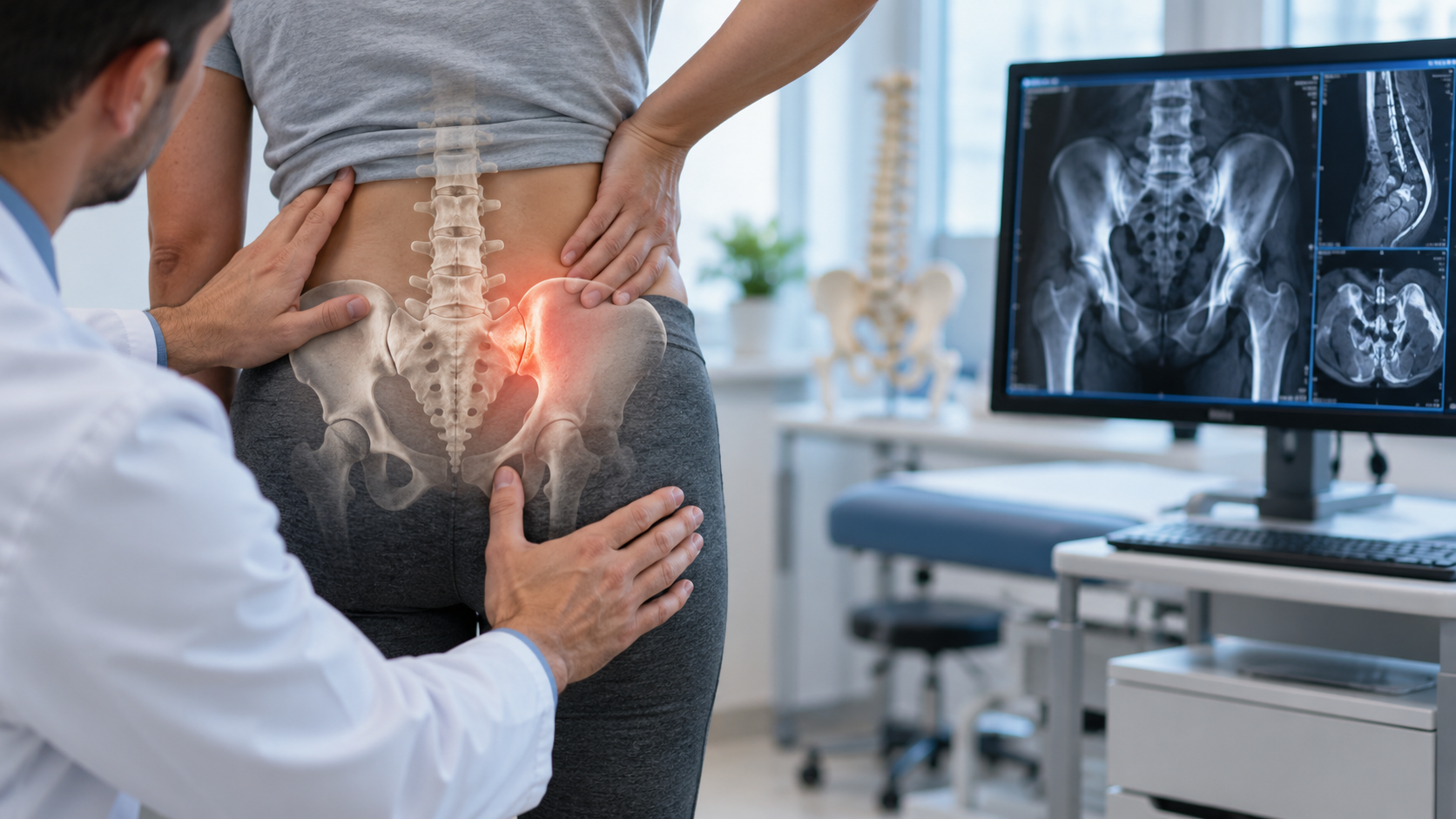
Persistent pain creates uncertainty. A scan can feel like the obvious way to “find the cause”. But spinal MRI frequently shows age-related changes in people who may not have pain at all, so the report must be interpreted in context.
Start with the diagnosis, not the procedure.
What an MRI can show
MRI can assess discs, nerves, the spinal canal, bone marrow and many soft-tissue structures. It can be particularly useful when nerve compression, serious underlying disease or a treatment decision needs clarification.
When imaging may not help
If the symptoms are straightforward and the result would not alter treatment, MRI can add labels without changing care. NICE advises against routine imaging in non-specialist settings and recommends specialist imaging only when the result is likely to change management.
How we use imaging differently
At Dorset Pain Clinic, imaging is not treated as a separate product. It is linked to the clinical question. Existing scans are reviewed first, and further imaging is considered only if it is likely to add useful information to the treatment plan.
Our model combines senior clinical assessment, specialist imaging, pain medicine, targeted intervention and rehabilitation. The aim is to reduce fragmentation, avoid unnecessary duplicated steps and give you a clearer plan.
Consultant-led assessment
Open MRI, X-ray and ultrasound
Image-guided procedures when appropriate
Physiotherapy, chiropractic and rehabilitation
Rheumatology and orthopaedic input when needed
Transparent, coordinated private care
The Dorset Pain Clinic difference
A complete team around the patient.
Dr Laith Al-Obaidi
Consultant Radiologist and Interventional Pain Specialist
Combines diagnostic imaging expertise with image-guided musculoskeletal and spinal intervention, linking symptoms, examination and imaging before deciding whether a procedure is appropriate.
Dr Khalid Alaib
Consultant in Pain Medicine and Anaesthesia
Provides senior specialist assessment of persistent and complex pain, medication review and personalised treatment planning, with extensive experience in interventional pain medicine.
Common questions
Answered simply.
Can an MRI show the exact source of pain?
Sometimes, but not always. Imaging findings need to match the symptoms and examination.
Is an abnormal MRI bad news?
Not necessarily. Many findings are common with age and may not be causing symptoms.
What if my MRI is normal but I still have pain?
A normal or near-normal scan does not mean the pain is unreal. Clinical assessment and rehabilitation can still be useful.
If pain is affecting your sleep, work, mobility or confidence, a specialist assessment can help clarify what is happening and what the sensible next step should be.