Consultant Radiologist and Interventional Pain Specialist • Updated 16 September 2026
The 30-second answer
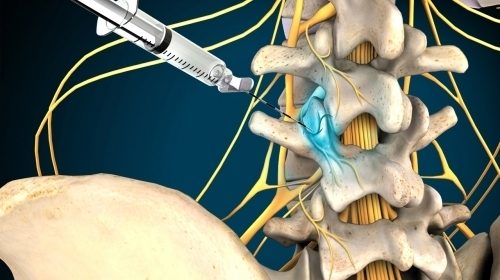
Image guidance helps the clinician place a needle accurately at the intended spinal target. But the important question comes before the procedure: is there a clear diagnosis and a good clinical reason to inject that particular structure?
Step 1
Your pain
Step 2
The right diagnosis
Step 3
The right treatment for you
Step 4
Recovery
Understanding the problem
Why use X-ray guidance?
Fluoroscopy provides real-time X-ray guidance during many spinal procedures. It helps confirm anatomical landmarks and needle position. Contrast may also be used in some procedures to confirm placement before medication is delivered.
Start with the diagnosis, not the procedure.
Which injections are used for which problems?
Different procedures have different purposes. Epidural or nerve-root approaches may be considered for selected nerve-related pain. Medial branch blocks are diagnostic procedures used in selected people with suspected facet-related pain before considering radiofrequency treatment. There is no single injection that is appropriate for all back pain.
What image guidance cannot do
Accurate needle placement does not guarantee that a treatment will work. If the pain generator is wrong, even a technically perfect injection may not help. This is why assessment, imaging review and consent are central to the pathway.
Why our pathway starts before the procedure room
At Dorset Pain Clinic, the procedure sits within a wider journey: clinical assessment, relevant imaging, explanation of alternatives, treatment only when appropriate, and rehabilitation afterwards when useful.
Our model combines senior clinical assessment, specialist imaging, pain medicine, targeted intervention and rehabilitation. The aim is to reduce fragmentation, avoid unnecessary duplicated steps and give you a clearer plan.
Consultant-led assessment
Open MRI, X-ray and ultrasound
Image-guided procedures when appropriate
Physiotherapy, chiropractic and rehabilitation
Rheumatology and orthopaedic input when needed
Transparent, coordinated private care
The Dorset Pain Clinic difference
A complete team around the patient.
Dr Laith Al-Obaidi
Consultant Radiologist and Interventional Pain Specialist
Combines diagnostic imaging expertise with image-guided musculoskeletal and spinal intervention, linking symptoms, examination and imaging before deciding whether a procedure is appropriate.
Dr Khalid Alaib
Consultant in Pain Medicine and Anaesthesia
Provides senior specialist assessment of persistent and complex pain, medication review and personalised treatment planning, with extensive experience in interventional pain medicine.
Common questions
Answered simply.
Are spinal injections recommended for ordinary low back pain?
NICE advises against spinal injections for non-specific low back pain.
When can an epidural be considered?
NICE says epidural local anaesthetic and steroid can be considered for acute and severe sciatica in selected patients.
What is a medial branch block?
It is a diagnostic block of nerves supplying the facet joints, used in selected patients before radiofrequency denervation is considered.
If pain is affecting your sleep, work, mobility or confidence, a specialist assessment can help clarify what is happening and what the sensible next step should be.