
Find your pain area Request an appointment
Expert insight • Your first visit

What Happens During a Pain Clinic Consultation?

What to expect, what to bring, and why a good pain consultation should give you a clearer plan rather than simply a procedure.

Picture of Dr Laith Al-Obaidi

Dr Laith Al-Obaidi

Consultant Radiologist and Interventional Pain Specialist • Updated 16 September 2026

The 30-second answer

A pain consultation should answer three questions: what is most likely causing the problem, what information is still missing, and what is the most sensible next step. You should leave understanding the plan and why it has been recommended.

Step 1

Your pain

Step 2

The right diagnosis

Step 3

The right treatment for you

Step 4

Recovery

Understanding the problem

We start with the story, not the scan

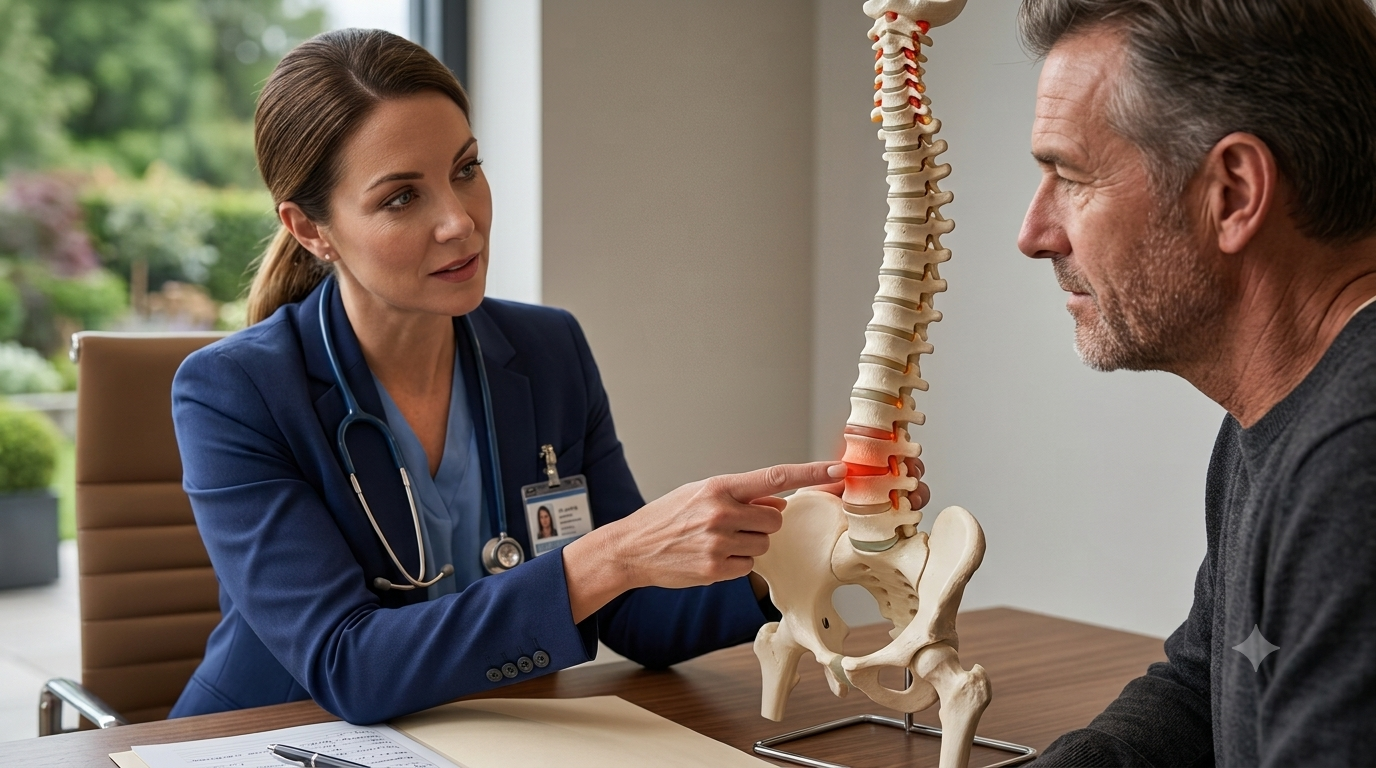
The consultation begins with your symptoms: where the pain is, how it started, what aggravates it, what you have already tried and what the pain is stopping you from doing. Previous scans and reports are useful, but they are interpreted after the clinical story is understood.

Start with the diagnosis, not the procedure.

The examination helps narrow the possibilities

A focused examination may assess movement, strength, neurological function, joints and pain provocation. The exact examination depends on the problem.

We decide whether more information is actually needed

Sometimes the existing information is enough. Sometimes an MRI, X-ray or ultrasound would change management. The aim is not to order every possible test, but to answer the question that matters.

The plan may or may not include a procedure

A good consultation can lead to rehabilitation, medication review, further imaging, an image-guided procedure, referral to another specialist, or simply a clearer explanation and monitoring plan. Booking a consultation should never mean committing to an injection.


The Dorset Pain Clinic difference

Everything connected in one specialist pathway.

Our model combines senior clinical assessment, specialist imaging, pain medicine, targeted intervention and rehabilitation. The aim is to reduce fragmentation, avoid unnecessary duplicated steps and give you a clearer plan.

Consultant-led assessment

Open MRI, X-ray and ultrasound

Image-guided procedures when appropriate

Physiotherapy, chiropractic and rehabilitation

Rheumatology and orthopaedic input when needed

Transparent, coordinated private care

The Dorset Pain Clinic difference

A complete team around the patient.

Dr Laith Al-Obaidi

Consultant Radiologist and Interventional Pain Specialist

Combines diagnostic imaging expertise with image-guided musculoskeletal and spinal intervention, linking symptoms, examination and imaging before deciding whether a procedure is appropriate.

Dr Khalid Alaib

Consultant in Pain Medicine and Anaesthesia

Provides senior specialist assessment of persistent and complex pain, medication review and personalised treatment planning, with extensive experience in interventional pain medicine.

Common questions

Answered simply.

What should I bring?

Previous scan reports, clinic letters, a medication list and any questions you want answered are useful.

Self-pay pathways may allow direct contact, while insurers may have referral or authorisation requirements.

Sometimes, but only when clinically appropriate, consented and logistically suitable. Many patients benefit from assessment first.

Clinical sources

Guidance used for this article

This article is general information and does not replace an individual medical assessment.

Other Blogs

Start with the diagnosis, not the procedure.

If pain is affecting your sleep, work, mobility or confidence, a specialist assessment can help clarify what is happening and what the sensible next step should be.