How to recognise nerve-related leg pain, when imaging is useful, and when specialist assessment may change what happens next.
Consultant Radiologist and Interventional Pain Specialist • Updated 16 September 2026
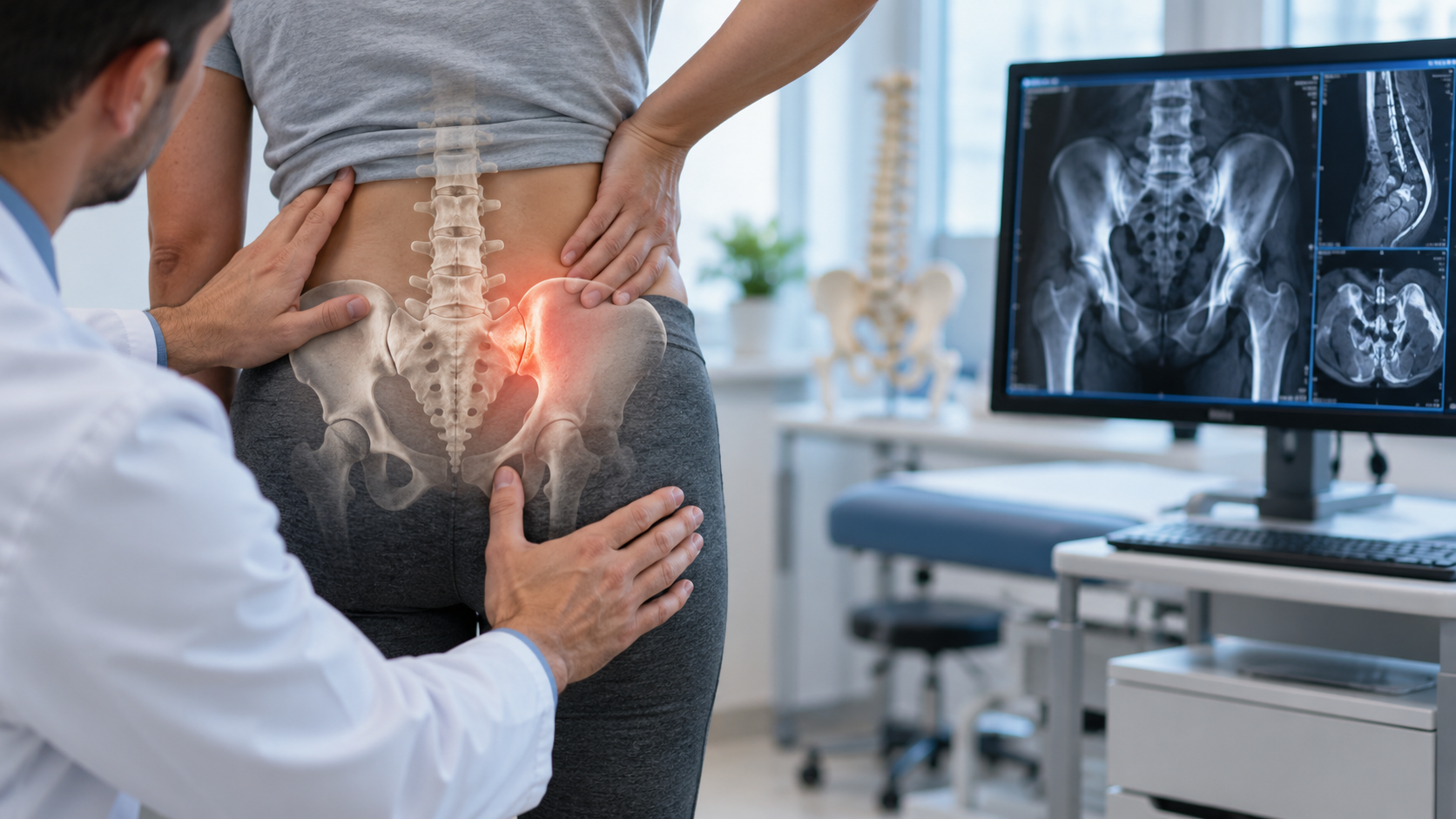
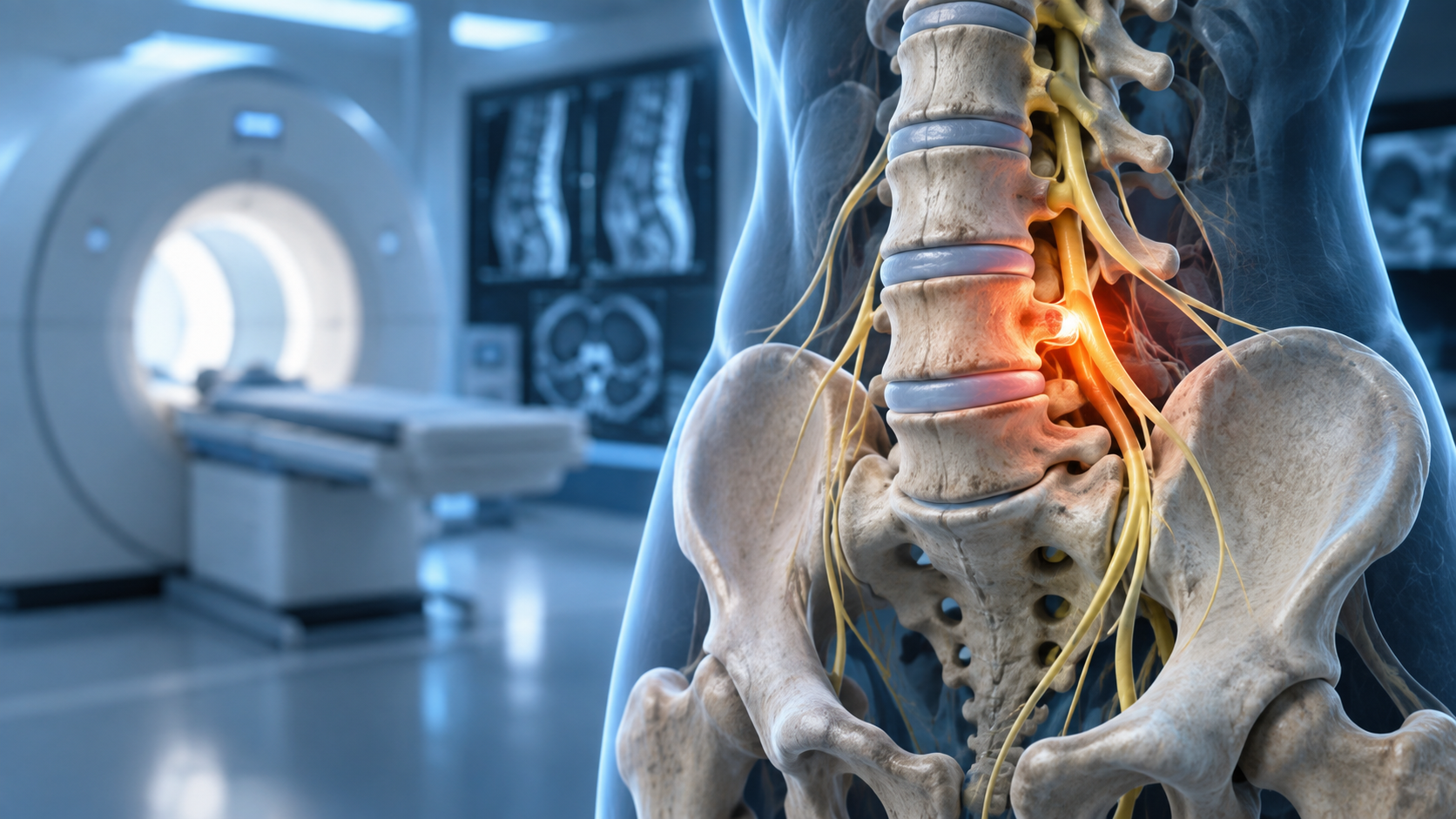
Sciatica usually means pain caused by irritation or compression of a spinal nerve, often producing pain from the back or buttock into the leg. Many episodes improve, but persistent, severe, recurrent or neurologically complicated symptoms deserve a more focused assessment.
Sciatica is not simply any leg pain. Typical symptoms can include shooting or burning pain from the buttock into the leg, tingling, numbness or, in some cases, weakness. The exact distribution can help identify which nerve may be involved.
Assessment becomes more useful when pain is severe, persists despite reasonable treatment, repeatedly returns, limits sleep or mobility, or is accompanied by neurological symptoms. The aim is to decide whether the problem is likely to be nerve-related and whether imaging or another treatment step is justified.

Not always. In specialist care, MRI is most useful when the result is likely to change management. A scan should answer a clinical question, not simply confirm that the spine has age-related changes.
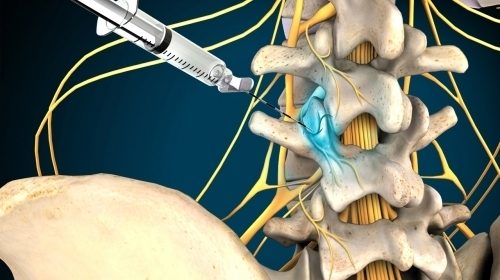
Most care starts with advice, activity and rehabilitation. For acute and severe sciatica, an epidural injection of local anaesthetic and steroid can be considered in selected patients. Surgery may be considered when non-surgical treatment has not improved pain or function and imaging findings match the symptoms.
Our model combines senior clinical assessment, specialist imaging, pain medicine, targeted intervention and rehabilitation. The aim is to reduce fragmentation, avoid unnecessary duplicated steps and give you a clearer plan.
Combines diagnostic imaging expertise with image-guided musculoskeletal and spinal intervention, linking symptoms, examination and imaging before deciding whether a procedure is appropriate.
Provides senior specialist assessment of persistent and complex pain, medication review and personalised treatment planning, with extensive experience in interventional pain medicine.
No. Disc-related nerve irritation is common, but other causes such as narrowing around a nerve can occur.
Yes. Many episodes improve with time, activity and rehabilitation.
Urgent hospital assessment is needed for symptoms such as new bladder or bowel dysfunction, saddle numbness, or severe or worsening weakness in both legs.
This article is general information and does not replace an individual medical assessment.
If pain is affecting your sleep, work, mobility or confidence, a specialist assessment can help clarify what is happening and what the sensible next step should be.