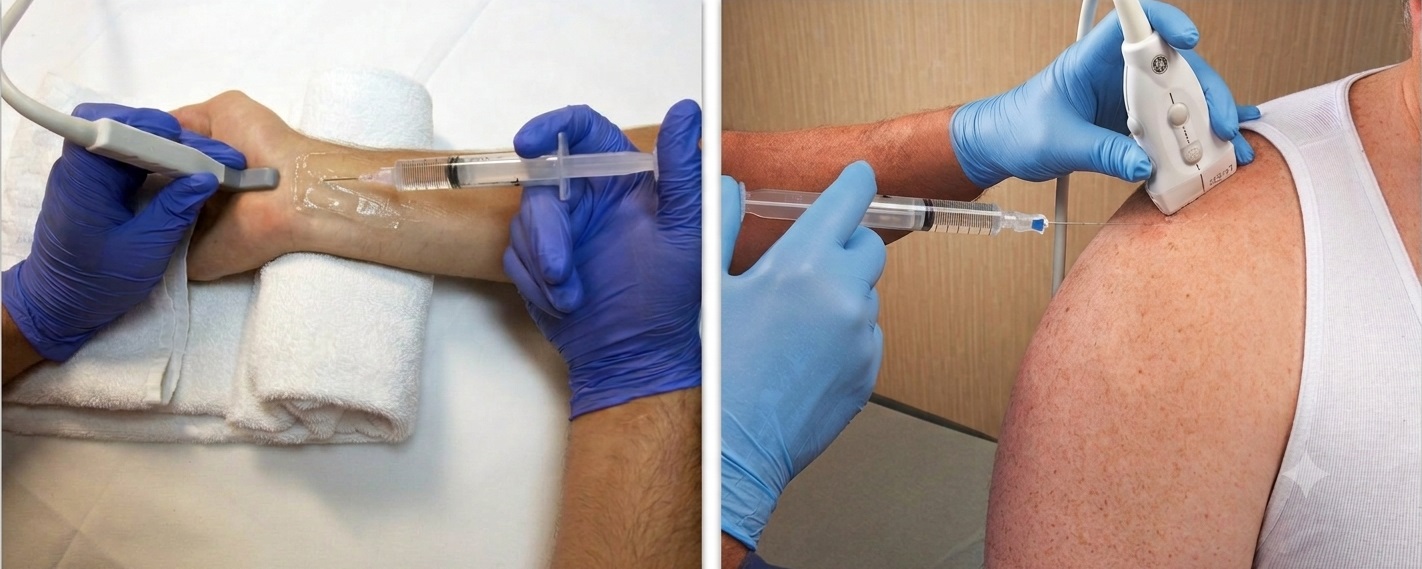
Joint injections involve placing medication directly into a painful or inflamed joint. They may be considered for conditions affecting the shoulders, hips, knees, hands or other joints to help reduce pain and improve mobility.
The procedure is performed in a clinical setting using careful sterile technique. Ultrasound or X-ray guidance may be used to improve accuracy depending on the joint being treated. Medication is injected into the joint after the area has been prepared and numbed if required.
The procedure may help selected patients by reducing pain and improving function. However, results vary and improvement is not guaranteed. Possible risks depend on the procedure and patient factors. These may include temporary pain flare, bruising, bleeding, infection, allergic reaction, steroid-related side effects or no improvement in symptoms. The specific risks will be discussed before treatment.

Before treatment, we will review medical history, medications and any relevant imaging. It is important to tell us about blood-thinning medication, allergies or active infection. After the procedure, patients will receive appropriate aftercare advice and may be advised to rest briefly before gradually returning to normal activity.
To discuss whether Joint Injections may be appropriate for you, please contact Dorset Pain Clinic.