Dr Al-obaidi has specialist expertise in musculoskeletal and spinal imaging, neuroradiology, ultrasound and image-guided intervention. His particular interest is bringing detailed imaging assessment and targeted treatment together.


We bring consultant assessment, specialist imaging expertise and precisely targeted image-guided treatment together in one coordinated pathway.
We listen to how pain affects your movement, sleep, work and daily life.
Clinical findings and relevant imaging are considered together.
Treatment is recommended only when it is appropriate for your problem.
Back pain, sciatica, arthritis, tendon problems and persistent musculoskeletal pain can have different causes, even when symptoms appear similar. We do not simply treat a scan result or offer an injection because an area hurts.
We listen to how pain affects your movement, sleep, work and daily life.
Scan abnormalities are common and do not always explain pain. Imaging needs clinical context.
We consider expected benefit, limitations, risks, alternatives and whether another approach is more appropriate.
Treatment is part of a pathway, not the end of one. We help clarify the sensible next step.
Clinical expertise and imaging expertise, together.
Our distinctive strength is the close relationship between assessment, diagnostic imaging and image-guided treatment.
Your symptoms, priorities, previous treatment and relevant medical information are reviewed before any recommendation is made.
MRI, CT, X-ray or ultrasound findings can be reviewed alongside the clinical problem rather than being considered in isolation.
When a procedure is suitable, ultrasound or fluoroscopic X-ray guidance is used to reach the intended anatomical target accurately.
Dorset Pain Clinic provides interventional treatment, but that does not mean every patient should have a procedure. Occasionally, the most useful outcome of a consultation is understanding that an injection is unlikely to help.
A clear route from symptoms to a sensible plan.
Where appropriate, the key decisions are connected rather than divided between unrelated appointments.
Your symptoms, concerns and goals.
History, examination and previous care.
Existing scans or further imaging if needed.
A shared discussion of suitable options.
Targeted intervention when appropriate.
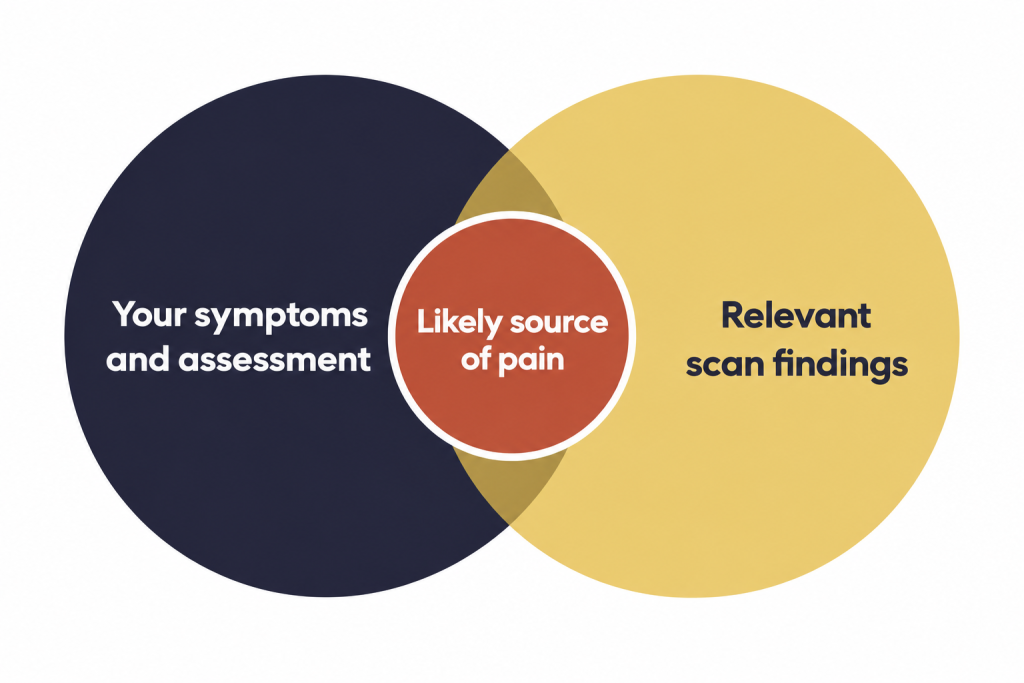
Scans provide valuable information, but findings need to be interpreted in the context of your symptoms. Our radiology background allows imaging to become an active part of treatment planning.
Relevant MRI, CT, X-ray or ultrasound can inform the clinical decision.
You are not pushed towards a procedure before the problem is understood.
You are treated by the doctors responsible for your care.
Our clinicians work across established NHS and private specialist services in diagnostic imaging, musculoskeletal medicine and interventional pain care.

Dr Al-obaidi has specialist expertise in musculoskeletal and spinal imaging, neuroradiology, ultrasound and image-guided intervention. His particular interest is bringing detailed imaging assessment and targeted treatment together.

Dr Alaib assesses and manages spinal pain, nerve-related pain and other persistent pain presentations. He focuses on balanced non-surgical treatment planning and interventional procedures where these are appropriate.
Specialist care with clarity, precision and continuity.
Good pain care should help you understand the problem, the choices available and what happens next.
Findings, benefits, limitations, risks and alternatives explained in understandable language.
You remain involved in deciding whether a proposed investigation or treatment is right for you.
Your treatment is selected for your particular problem rather than applying the same approach to everyone.
If another investigation, therapy or specialist is more suitable, we will say so clearly.
No injection can guarantee complete or permanent pain relief. We offer careful assessment, appropriate imaging review, precisely performed treatment when indicated and an honest conversation about what is realistically achievable.
Treatment should have a purpose beyond simply reducing a pain score.
You do not need to diagnose yourself or choose a procedure before contacting us. Start with a specialist consultation and we will help identify the most appropriate next step.